|
The 5th Lord Coleridge
Late Coldstream Guards
|
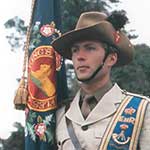
Lord Coleridge (Bill Coleridge), who has died aged 88, had an adventurous career first as a Coldstream Guards officer and, after retiring from the Army, as a director of Abercrombie and Kent, pioneers of the first modern luxury safari in Africa.
William Duke Coleridge was born on 18th June 1937 at Ottery St Mary, Devon, in the same room that the five previous heirs had been delivered. His father, Richard, 4th Lord Coleridge, was a captain in the Royal Navy who served in the War Cabinet offices before being posted to Washington DC with the Joint Staff Mission in the Second World War.
Young William, always known as Bill, was in London during the Blitz and he was under the age of five when he crossed the Atlantic to be with his father. It was the height of the U-Boat menace, and he watched devastating attacks by German wolfpacks on convoys escorted by Royal Navy warships.
Aged nine, he returned to England from Washington DC wearing blue jeans, a rhinestone belt, chewing gum and speaking American English. Despite a few months of elocution lessons in Devon, on his first day at school he was still nicknamed, ‘The Yank’.
He was educated at Eton before attending RMA Sandhurst and, in 1957, he was commissioned into the Coldstream Guards and posted to the 2nd Battalion on public duties. It was the only year out of almost 20 years in the Guards that he ever wore a red tunic. After a spell in Germany with the 1st Battalion, in 1960 he accompanied the 2nd Battalion to Kenya.
He was stationed up country at Gilgil. It was near the motor racing circuit at Nakuru and, after a number of successes driving his own Mercedes, he became a driver with the works entered Mercedes Team. In March 1961, in competition with 77 cars from England, France, Germany and Africa, he set off from Nairobi, Kenya, on the East African Safari, reputed to be the toughest motor rally in the world.
Bill and his two co-drivers, John Manussis and David Beckett, were driving a Mercedes 220SE. The half way stage was reached after two days, and they were allowed seven hours rest. Coleridge had counted on a number of late nights in night clubs to build up stamina and harden him to fatigue but it was only with the greatest difficulty that his companions managed to get him out of bed and back into the car.
After four days and nights of driving at high speeds, sometimes in blinding dust, over 3,300 miles of rutted tracks, boggy terrain and twisting mountain roads, negotiating hazards posed by overloaded lorries, herds of roaming elephants and jammed brakes leading to total loss of control for some heart-stopping moments, he and his team defeated the works-entered Mercedes and emerged as outright winners by the tiny margin of five minutes. A hundred miles from the finish, 600 Guardsmen from his battalion lined the route to cheer the team home.
Attracted by stories of people coming out of the Congo with pockets full of diamonds, he and Jimmy James, a brother officer, hitched a ride on a United Nations plane to Elizabethville (now Lubumbashi). After the country had become independent in 1960, a series of military revolts against Belgian officers broke out and UN soldiers were deployed in an attempt to contain the widespread violence and unrest.
Bill and James tried to sneak out of the airport because they were in civilian clothes, but they were arrested by Congolese soldiers and held in detention. Having escaped from their cell and waved down a Swedish UN truck, they were welcomed by the Swedish contingent because Coleridge could speak French and Swahili. The two men were put on patrol. It was the first time that he had come under fire. ‘I certainly grew up’, he said afterwards, ‘when people started shooting at me’.
When they tried to leave the Congo, Coleridge was recognised by a guard and re-arrested. His companion persuaded the UN to ban any aircraft from landing until he was released. This worked but the airport authorities were on the receiving end of some strong language from pilots circling the airport and running out of fuel.
In 1962, after joining the 3rd Kenya Rifles (formerly the King’s African Rifles), he was posted to the Tana River and patrolled the Northern Frontier District to prevent the Shifta, ethnic Somali rebels, infiltrating Kenya. They were a fierce and cunning foe and there were several skirmishes and a sharp fire-fight after a night attack on 3KR’s base camp at Garrissa.
Mid-tour, he was given the task of organising an Army athletics championship. The high altitude bred good long-distance runners and with modern training techniques, some of the soldiers went on to achieve considerable success in international competitions.
Bill Coleridge was closely involved in the ceremonial duties leading up to a big parade on the day Kenya gained its independence in December 1963. For the tribal dancing, the females were issued with ornate green bras and grass skirts. They soon rid themselves of the bras because they found them more useful as cradles for their babies, but the Welsh Guards regimental sergeant major was not amused and quickly put an end to this unscheduled unpackaging of the performers.
The Duke of Edinburgh and Jomo Kenyatta, who was to become Kenya’s first President, stood together on the central stand. It was rumoured that as the Union Jack was being lowered for the last time and replaced by the Kenyan flag, the Duke turned to Kenyatta and said, ‘You know, it’s not too late to change your mind’.
The lights were dimmed and a huge firework display erupted. The African women in the stand panicked. Convinced that the end of the world had come and that they were being punished for breaking their ties with Britain, they threw their arms around any white man in uniform for protection. Coleridge found himself with five clinging on to him.
In 1964, he returned to the Coldstream Guards and commanded a company of the 2nd Bn in Aden. He then joined the Guards Independent Parachute Company, serving with them between 1966 and 1968, a posting which included tours in Malaya and Hong Kong.
In 1970, he served with the 1st Bn Coldstream Guards on winter warfare training in Norway and Finland before once again returning to the Guards Parachute Company, initially as second in command and then as the commander. He commanded them for two tours on operations in Northern Ireland on the border around Crossmaglen.
In 1974 he joined Colonel John Blashford Snell’s Zaire River Expedition. It was a journey of more than 2,700 miles along a river that was not fully charted and the first complete navigation for a century. There were many medical challenges on the way. The expedition’s nurse was Pamela Baker, born in Tanzania and the daughter of a senior diplomat. Coleridge married her three years later.
In 1977, he retired from the Army in the rank of major. For the next 12 years, he was a director of Abercrombie and Kent. He had worked for the travel company in Kenya when the whole ethos was changing and hunters were enjoined to ‘shoot with a camera, not with a gun’. After moving from London to Riyadh, Saudi Arabia, as regional director, he built up a successful business promoting luxury travel to the super-rich. He subsequently worked as an investigator for Kroll, the international financial and risk advisory company.
As a young man, he played rugby for Blackheath Rugby Club and for the Combined Services XV. In the last two decades of his life however, he was hampered by accumulated spinal injuries and failing eye sight.
In 1984, on the death of his father, he succeeded in the title. The peerage was created in 1873 for John Duke Coleridge who served as Lord Chief Justice of England from 1880 to 1894. William Coleridge was the last family member to live in the Chanter’s House in Devon. The house had been in the family for 250 years and its sale in 2006 caused him great sadness. With his support, in 2022, on the 250th anniversary of the birth at Ottery St Mary of his ancestor, Samuel Taylor Coleridge, a bronze statue of the poet was erected in the small town outside St Mary’s Church.
Bill died on 19th November 2025. He married first, in 1962, Judy Hambrough. When the marriage ended in 1977, he married Pamela Baker. She died in 2018. He married for the third time, in 2020, Rosemary, Viscountess Exmouth, who survives him with a son and two daughters by his first marriage and two daughters by his second. James Duke Coleridge, his son by his first marriage, succeeds him as 6th Baron Coleridge.
With thanks to The Daily Telegraph |
|